What it does
A technician stands at a machine, records a short sample under a defined procedure, and the recording arrives securely for analysis — with the machine details, the site, and the exact capture conditions attached to it.
It works without a signal. Recordings are held on the phone and upload themselves when connectivity returns, so a factory floor with no coverage does not mean a lost measurement.
Available on
- iPhone — iOS 17 and later
- Android — 7.0 and later
Each recording carries
- Machine make, model, type
- Site and operational status
- Capture conditions and integrity checksum
How it works
- Install from the link you were sent.
- Activate once, with a single-use code.
- Position the phone as the recording protocol describes — the geometry matters more than most people expect.
- Record for the stated duration.
- Done. The recording uploads itself, now or when there is signal again.
What the app looks like
Deliberately plain. A technician on a factory floor should not have to think about the tool — the whole job is a code, a button and a wait.
iPhone
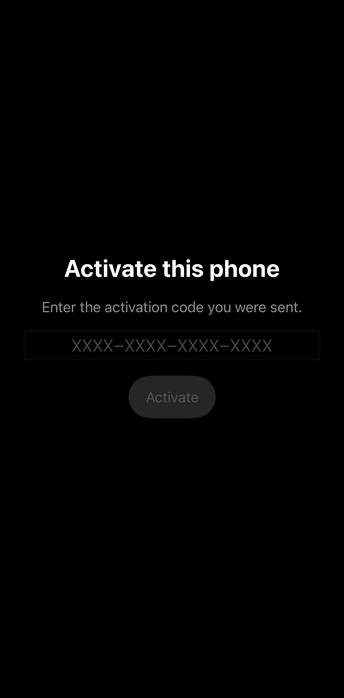
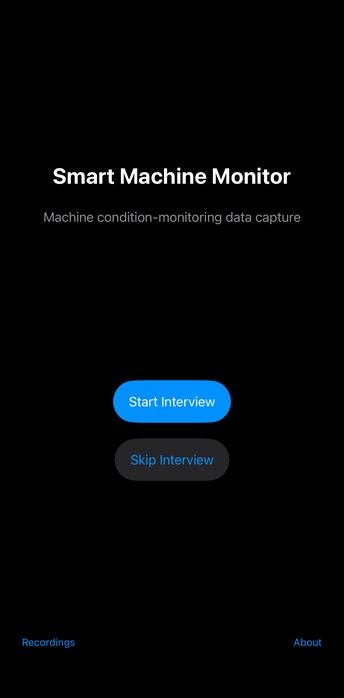
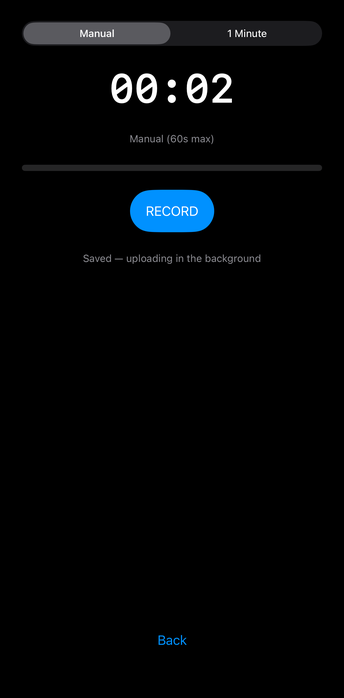
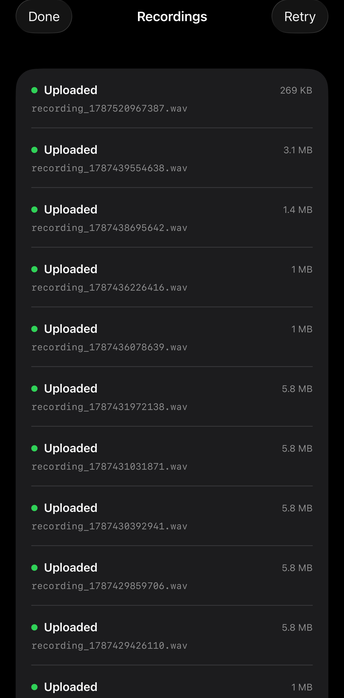
Android
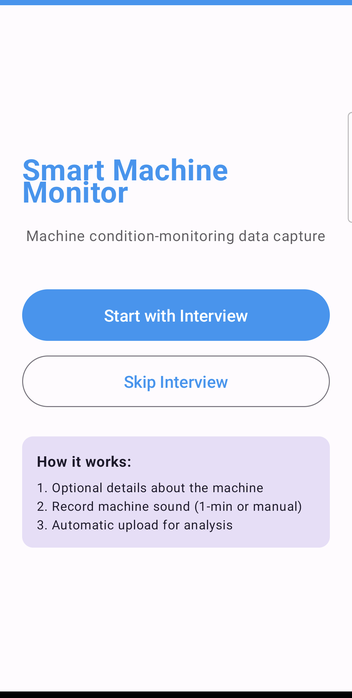
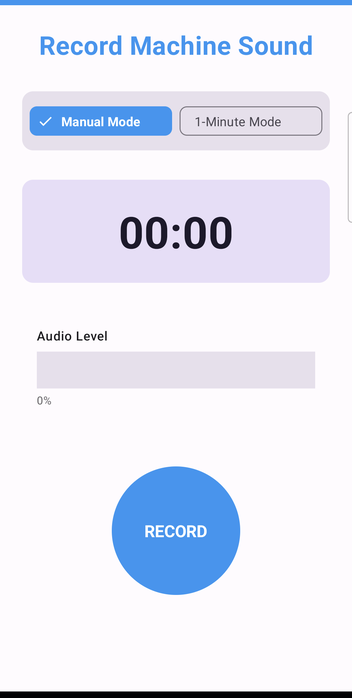
The same steps on both platforms. Each phone shown in its own display theme.
The recording protocol
Results depend far more on how a recording is made than on how many are made. A microphone at a different distance, or a phone held at a different angle, changes the sound more than the difference between two machines does.
The pilot protocol therefore fixes the distance, the orientation and the operating condition, and asks for repeats of the same machine rather than single samples of many. Technicians receive it as a single page.
What a recording looks like
Every capture is a full-bandwidth waveform, not a compressed voice memo: 44.1 kHz, 16-bit, uncompressed. That matters, because the detail that distinguishes one machine from another lives in exactly the high-frequency content that ordinary audio compression discards.
What is proven, and what is not
Being straight about this matters more than sounding impressive.
Working today
- Cross-platform capture, iPhone and Android
- Offline recording with no data loss
- Encrypted, checksum-verified transfer
- Machine, site and capture provenance
- A controlled collection protocol
- An analysis pipeline over the collected data
Under validation
- Machine acoustic signatures
- Anomaly detection
- Fault identification
- Maintenance prediction
- Continuous monitoring
This is a data-acquisition and analysis platform, not a diagnostic product. It does not yet detect faults or predict failures. The purpose of the pilot is to collect the controlled data that would make those things answerable.
Joining the pilot
Installation and access are deliberately separate. The install link can be shared freely — having the app grants no access to anything. A separate single-use activation code, which expires and can be revoked, is what allows a phone to upload.
If you have been sent an invitation link, open it on the phone you will use. Otherwise contact brk@liberlocus.com.
Documents
Privacy policy — what is collected and where it goes.